Materials · Oak Buck Journal
Why we use full-grain leather.
A material chosen for its character, its structure, and the way it becomes part of everyday life.
The starting point
The surface matters.
A wallet is handled every day. You notice its weight, the way it folds, and how its surface feels in your hand. For Oak Buck, those details begin with the leather.
Full-grain leather retains the hide’s grain surface without sanding or buffing it away to correct its appearance. That surface can carry subtle wrinkles, healed scars, and differences in texture. We value the individuality it brings to a carefully made piece.
Full grain describes the retained surface; it does not, by itself, tell you everything about quality. Hide selection, tanning, finishing, thickness, and construction all influence how a finished wallet performs.
Our choice for OB-01
English bridle. Purposeful structure.
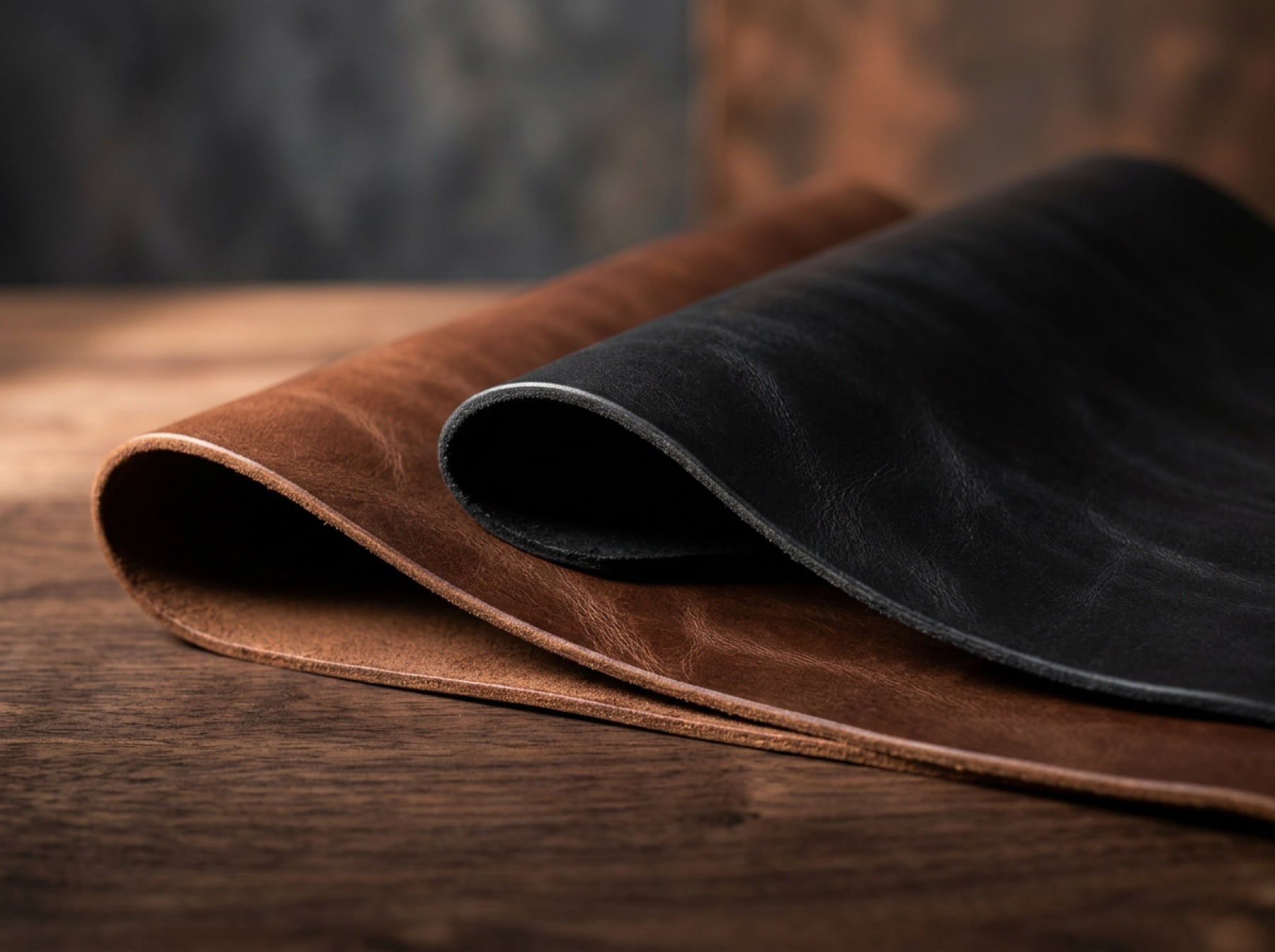
For OB-01, we use full-grain, vegetable-tanned English bridle leather. “Full grain” describes the surface, while “vegetable-tanned” describes the tanning process. They refer to different qualities of the same material.
Vegetable tanning uses plant-derived tannins to turn hide into leather. English bridle leather is traditionally associated with saddlery and is dressed with oils and waxes. Its balance of firmness and flexibility suits the defined profile we want for the Vertical Wallet.
In Black/Walnut, that structure supports a bold exterior and a warm interior. We choose leather for how it serves the design: how it holds a fold, how it feels in a pocket, and how it responds to regular handling.
Natural character
No two pieces are identical.
Small healed scars, subtle wrinkles, grain variations, and shifts in tone may appear in First Quality pieces. Their presence is part of working with a natural material. A standard product photograph represents the design and color; the exact grain and markings of your wallet will vary.
We distinguish natural character from workmanship. Misaligned panels or poor stitching are construction issues, and should never be explained away as leather character.
Pieces with more prominent cosmetic variation may be offered as Workshop Grade, with individual photographs so you can see the piece you are choosing.
Over time
A surface shaped by use.
Handling, friction, light, and the oils from your hands gradually change leather’s appearance. This development is often called patina. The surface may gain a softer sheen, deepen in tone, or show contrast at the places you touch most.
How quickly it changes depends on the leather’s finish, its color, your habits, and its care. Walnut may show tonal changes more readily than black. There is no fixed timetable or identical result.
Our aim is a wallet you enjoy carrying from the beginning, with room for its appearance to develop alongside your daily routine.
Care for what you carry
A little attention goes a long way.
Brush away loose dust, wipe gently when needed, and allow damp leather to dry naturally away from direct heat. Use conditioner sparingly and test it on an inconspicuous area first, as it can darken the surface. Leather is not waterproof.
Read our Leather Care Guide for a straightforward routine. Thoughtful care complements the material and the handwork that goes into each piece.
Explore the Vertical Wallet